A real-world safety compliance deployment by International Fire Inc.
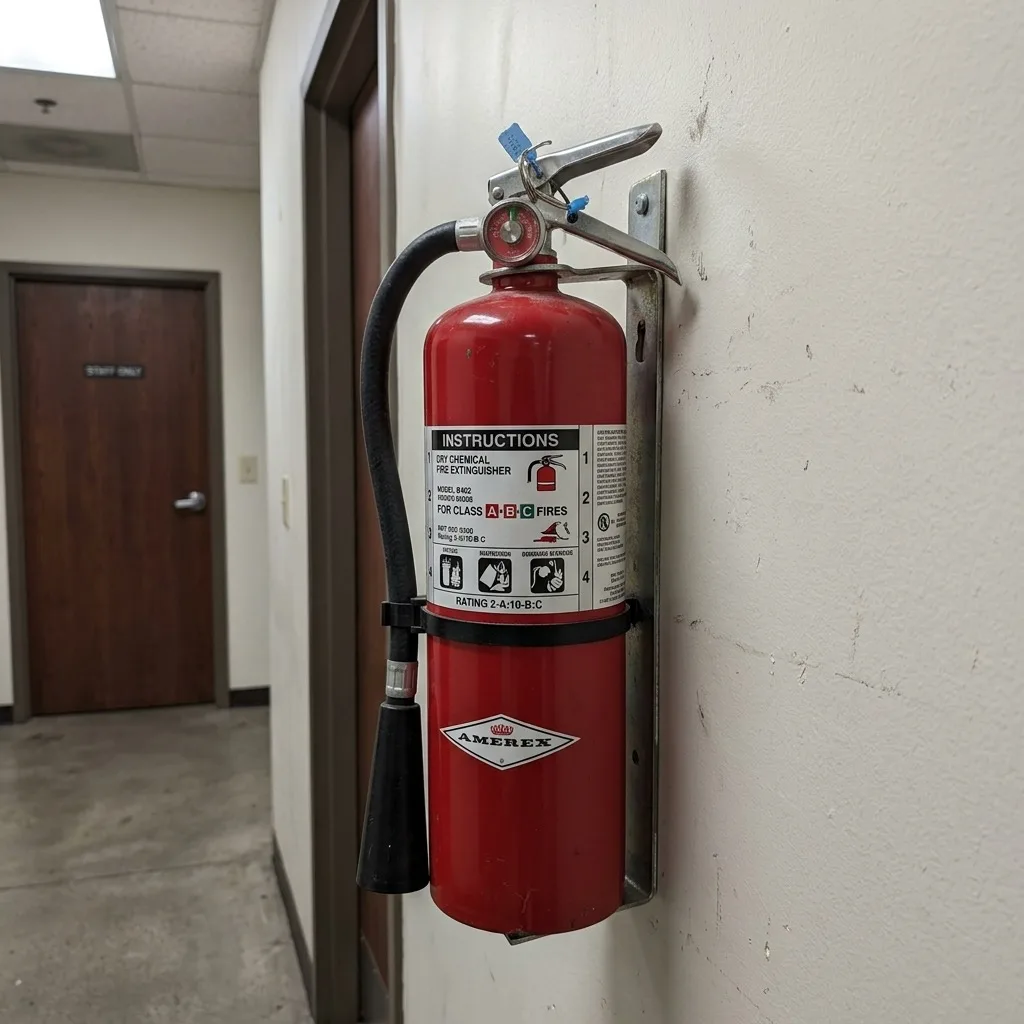
On Jul 31, 2026, the life-safety team at International Fire Inc. completed a certified annual fire extinguisher certification for a commercial property in the Financial District, San Francisco, CA. Our primary objective was to ensure full alignment with California Code of Regulations Title 19 public safety standards and local fire code mandates. This commercial property, situated near the commercial corridor of Laguna Honda Blvd and the popular Presidio landmarks, represents a vital business hub in San Francisco. The local density of retail, retail warehouses, and multi-family residences near US-101 demands strict adherence to municipal fire marshal codes. Our certified route technicians were dispatched from our central operations center via Laguna Honda Blvd to execute this life safety audit.
Every commercial property owner and facility director in the San Francisco Bay Area carries a legal mandate to preserve code-compliant safety networks. When fire alarm grids, commercial fire sprinkler valves, or portable fire extinguishers fail standard inspection audits, the property is subject to severe fire marshal citation warnings, insurance coverage invalidation, or occupancy shutdown directives. For this project in Sunset District, our crew performed a comprehensive physical walkthrough, checking sensor activation paths, structural mounting configurations, piping pressures, and tags to certify total facility protection.
The client's main operational concern was: Out-of-date extinguisher certification tags and pressure drop in CO2 unit.. In high-occupancy structures, neglected tag schedules or aging safety equipment represent a critical hazard. Over time, internal backup batteries fail discharge metrics, dust clogs optical smoke sensors, water sprinkler valves accumulate mineral blockages, and extinguisher cylinder gauge pressures slowly drop. These hidden failures are rarely noticed until a building inspector issues a citation, or an emergency event occurs and the safety gear fails to deploy. In this specific facility, management noticed that their compliance tag dates had expired, and their warning bulbs or pressure gauges showed indications of system trouble.
To avoid code compliance penalties and guarantee immediate protection for their staff, occupants, and commercial assets, the property manager contracted International Fire Inc. to execute an immediate site check. We scheduled a priority dispatch to analyze the physical conditions of the building's safety gear, run functional testing parameters, swap out defective backup parts with OEM components, and attach certified Title 19 tagging labels.
We checked gauge pressure indicators, checked safety seals, verified mounting bracket stability, and audited inspection tags. Frequent violations include expired annual certification tags, missing units, blocked paths, and cylinders requiring 6-year maintenance or 5/12-year hydrostatic testing. In this commercial structure, our safety check revealed several notable code violations. During the visual audit, we inspected the placement and condition of all physical devices. Our crew checked for physical blockages in egress routes, reviewed the mounting height of wall-mounted items, verified that correct warning signage was visible, and checked for proper spacing between safety devices. In the mechanical rooms, we checked structural pipe hangers, analyzed gauge metrics, and checked for rust or painted surfaces on vital equipment components.
In addition to structural checks, our technicians verified system communication relays. For addressable fire alarms, we ran loop diagnostic checks to identify signal faults or open circuits. For water sprinkler systems, we checked the tamper switches on all control valves to confirm they immediately route trouble alerts to the main alarm board. Our emergency lighting audit involved cutting primary electrical power to simulate a building blackout, allowing us to inspect exit sign illumination levels and check which backup batteries failed to power bulbs. The findings were documented in detail to provide the property manager with an NFPA-compliant field report.
This inspection and testing service was executed in strict accordance with NFPA 10, California Title 19 (Chapter 3), OSHA 29 CFR 1910.157. These regulations outline the precise frequencies, testing procedures, and documentation required for commercial buildings. For example, California Title 19 (Public Safety) regulates the testing of portable extinguishers, fire sprinklers, and kitchen hood systems. Any service provider executing these tests must carry a valid State Fire Marshal license, and all certified tags must feature the license number and signature of the testing technician. Failing to maintain updated tags is a direct violation of local fire codes and can result in immediate fines during fire marshal walkthroughs.
Furthermore, standard life safety guidelines require property managers to maintain a written inspection log on-site for a minimum of five years. This log must detail the date of service, names of licensed technicians, specific devices tested, battery voltage metrics, pressure readings, and any repairs completed. Our digital reporting system archives these compliance details automatically, providing our clients with downloadable PDF logs that can be presented directly to fire inspectors or insurance adjusters to prove continuous compliance.
Commercial fire safety grids rely on high-grade mechanical and electronic components manufactured by industry-leading brands. During this project, we serviced and integrated safety equipment from Honeywell and Fire-Lite. Maintaining brand uniformity across panels, sensors, and valves is important to prevent communication lag or compatibility issues within addressable loops. For example, if a building uses a Honeywell alarm panel, all replacement smoke detectors and relay modules should be certified Honeywell components to ensure seamless loop address mapping.
Similarly, for portable extinguishers and kitchen hood suppression systems, we utilize only premium brands such as Amerex and Ansul. These manufacturers produce rugged steel and brass cylinders built to withstand harsh commercial and kitchen environments. Our mobile service vans carry a complete inventory of OEM replacement parts—including discharge nozzles, fusible heat links, tamper seals, replacement gauges, brackets, and battery cells—allowing us to resolve code violations immediately on-site without secondary service calls.
To resolve the identified violations and restore full code compliance, our route crew executed the following solution: Inspected and tagged 12 dry chemical units, performed hydrostatic testing on one CO2 unit, recharged and certified.. Our technician serviced and certified the units, applied official Title 19 tags, installed heavy-duty wall mounting brackets, performed pressure recharges on low cylinders, and provided code-compliant safety signs. Our technicians worked systematically through the building to avoid disrupting daily commercial operations. For portable units, we completed structural mounting adjustments, verified that safety pull pins were secure, and cleaned dust from all nozzles. For electronic systems, we replaced aged backup battery packs, installed high-visibility LED bulbs in exit signage, and ran functional signal diagnostics on alarm panel address paths.
Additionally, we completed a comprehensive functional re-test of all repaired components. In water-based sprinkler grids, we conducted a main drain flow test to confirm static and residual pressures return to normal operating levels, proving that supply piping has no obstructions. For alarm grids, we triggered smoke sensors using test aerosol and confirmed that notification horns and strobes actuated properly, and that the dialer successfully routed signal dispatches to the central station. All compliance tags were signed, dated, and applied to the equipment to verify safety certification.
The operational results of this compliance deployment were immediate. Before our visit, the commercial facility had expired Title 19 certification tags, several exit signs that failed backup battery drain tests, and extinguisher units that had lost charge pressure. These defects meant the facility was operating with critical safety gaps and was at risk of failing the upcoming local fire marshal code audit. The building's emergency egress paths would have been left in total darkness during a primary power outage, placing employees and customers in danger.
After our certified route team completed the repairs, optimized the image files, and applied new Title 19 tags, the building is 100% compliant and fully protected. All backup battery banks now easily pass the mandatory 90-minute load test, exit signs display clear illumination along egress routes, and fire extinguishers show appropriate gauge pressures. We compiled all pressure logs, battery metrics, and device checks into a structured PDF compliance report, which was signed by our licensed inspector and emailed directly to the property manager for their records.
To preserve code compliance and ensure safety systems deploy reliably, property managers must establish a routine preventive maintenance program. Under NFPA 10, extinguishers require a monthly visual inspection by property staff, professional annual certification tagging, 6-year internal maintenance servicing, and hydrostatic testing every 5 or 12 years depending on cylinder class. Property staff should perform basic visual checks monthly, verifying that pressure gauges are in the green zone, nozzles are clean, mounting brackets are secure, exit sign indicator bulbs are lit, and egress paths are free of storage boxes.
Any signs of equipment damage—such as rusted extinguisher shells, chipped sprinkler heads, alarm trouble codes, or flashing warning bulbs on exit signs—must be reported to a licensed fire protection concern immediately. International Fire Inc. coordinates automated maintenance scheduling and mobile dispatching services throughout San Francisco, the Peninsula, and the Bay Area to ensure commercial properties never miss an inspection date. Regular servicing extends the lifespan of your safety gear, prevents false alarms, and keeps your facility up to code.
Our certified safety inspectors are ready to service, test, and tag your commercial property. We offer emergency mobile dispatches and same-day tagging service walk-ins at our shop.
